
 English
 Russian
 French
 Spanish
 Portuguese
 Italian
 Arabic
 German


Types and Functions of Hotel-Related Cards
- Oct 27 , 2025
- By: Guangzhou Zhanfeng Smart Card Technology Co.,Ltd.
- Follow Us
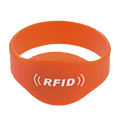
Hotels typically utilize a variety of cards to facilitate operations and enhance guest experience, with common types including hotel membership cards, room cards, IC cards, and ID cards. Each type differs in its naming and specific applications. This article primarily elaborates on the roles of these key cards in hotel scenarios.
Hotel Room Cards
As a core access tool for guests, the primary function of hotel room cards is to unlock guest rooms. When a guest checks in at the hotel front desk, they receive a room card. By simply swiping this card near the door lock, the guest can unlock the door and enter the room—serving as a temporary "key" for the guest during their stay. Most traditional room cards are equipped with a magnetic stripe on the back, which stores the necessary access information.
Similar to membership cards used in other industries, hotel membership cards act as general identification credentials. They are not only used for membership authentication in hotels but also applicable in various consumer venues such as shopping malls, fitness centers, and restaurants that have cooperative relationships with the hotel. Beyond commercial scenarios, membership cards (in a broader sense) are widely used for identity verification in settings like schools, clubs, enterprises, government agencies, and social groups.
Hotel IC Cards and ID Cards
Compared with the aforementioned two types of cards, hotel IC cards and ID cards boast more powerful functions, higher security, and greater convenience. Their integrated capabilities include point accumulation, card swiping, payment, and room access.
The basic working principle of an IC card is as follows: An RF reader transmits a set of electromagnetic waves at a fixed frequency to the IC card. Inside the card, there is an LC series resonant circuit tuned to the same frequency as the waves emitted by the reader. When exposed to the reader's electromagnetic waves, the LC resonant circuit resonates, causing a capacitor within the card to accumulate charge. At the other end of this capacitor, a one-way electronic pump transfers the accumulated charge to another capacitor for storage. Once the stored charge reaches 2V, this capacitor functions as a power source, providing the required operating voltage for other internal circuits. This enables the card to transmit stored data to the reader or receive data from it.