
 English
 Russian
 French
 Spanish
 Portuguese
 Italian
 Arabic
 German


China Warranty Card Designs: Luxury OEM Templates for Watch & Jewelry Brands
- Oct 21 , 2026
- By: Guangzhou Zhanfeng Smart Card Technology Co.,Ltd.
- Follow Us
For a watch or jewelry buyer, the box, the pouch, and the warranty card are the first three physical touches of the brand long before the timepiece ticks or the gemstone catches light. A flimsy warranty card printed on office-paper stock, a gold stamp that rubs off in the first week, or a serial number that cannot be verified online tells the customer, quietly, that the brand cuts corners.
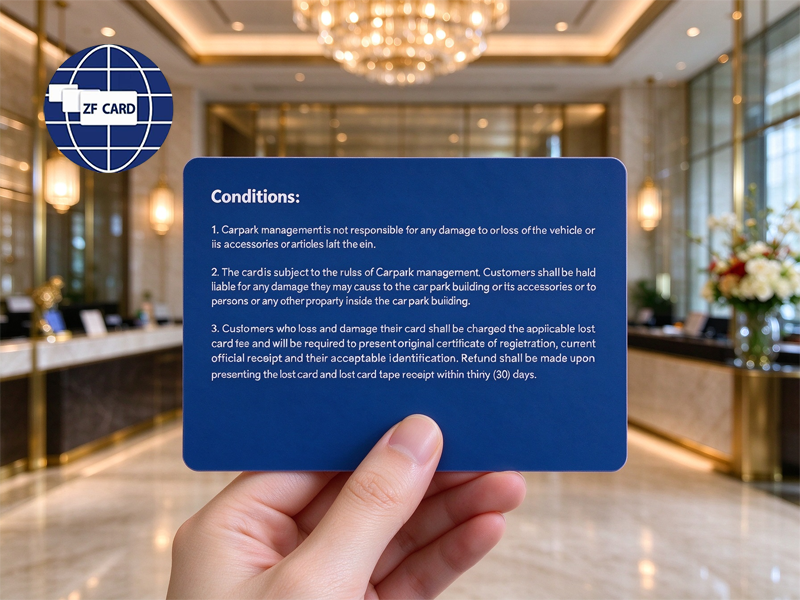
That is why serious watch houses, fine-jewelry ateliers, and DTC luxury startups are increasingly turning to experienced Chinese OEM suppliers for premium china warranty card designs: the same printing, paper, and anti-counterfeiting know-how that used to live only in Switzerland, Germany, and Japan is now available at factory-direct cost, with global shipping. If you are a brand founder, packaging designer, or procurement manager sourcing warranty cards for the first time, here is what you actually need to know before you send an RFQ.
Start by understanding that a modern luxury warranty card is no longer a folded slip of paper with printed text. It is a branded, serialized, anti-counterfeiting document that lives in the customer's wallet for two to five years, and it has to perform four jobs at once. It proves the item is genuine and carries the manufacturer's guarantee, it records the sale date and authorized dealer, it gives the owner a channel to register the product and claim after-sales service, and it quietly reinforces the brand's visual identity on every repeated touch. A card that only does the first job is a receipt; a card that does all four is part of the product experience. That shift is why brands now commission thick cotton paper, edge gilding, and embossed logos for an object most customers will fold into a wallet and never frame.
Material choice is the first design decision, and it cannot be undone later. Luxury watch warranty cards commonly use 350–450 gsm uncoated cotton or cotton-blend paper — often 100% recycled cotton fiber, which feels soft, fibrous, and unmistakably different from ordinary wood-pulp cardstock. Jewelry brands often prefer deep black or deep navy uncoated boards in the same weight range, so that hot-stamped gold or silver logos read as metallic rather than shiny. Avoid glossy art paper for any warranty card meant to feel premium: it photographs poorly, fingerprints immediately, and signals mass-market production at first touch. If sustainability is part of your brand story, look for FSC-certified cotton blends, tree-free kenaf, or seed-embedded paper, but test how those stocks take foil and embossing before you commit a full run.
Printing and finishing are where a good china warranty card design separates itself from a cheap one. Offset lithography handles Pantone spot colors perfectly, which matters because luxury brands almost always work from a single brand gold or brand silver rather than CMYK approximations. Hot foil stamping in matte gold, matte silver, rose gold, or soft black foil is the standard signature finish, usually paired with blind embossing or debossing on the logo so the owner can feel the mark without reading it. Edge painting — the so-called gilded edge seen on high-end watch boxes — can be applied to thick cardstock too, and it is one of the most cost-effective "expensive-looking" upgrades you can buy. Additional layers include soft-touch lamination on the cover, raised UV spot on the serial number, and a hand-feel watermark thread inside the paper core. Each step adds a few cents to the unit cost but materially raises the perceived value of the whole box.
Structure and size are the next practical choice. The simplest format is a single CR80 or CR80-ish card (roughly 85 × 55 mm), which slots neatly into the watch box and into the customer's wallet. Mid-range watches and jewelry boxes usually use a bi-fold or tri-fold card that opens like a small booklet, giving you room for a front cover, a warranty terms page, an authorized-dealer stamp field, and a customer registration page. High-end watch brands still use the multi-page warranty booklet printed in four or five languages, often thread-stitched and slipcased. Choose the format by how much legal text and how many languages you actually need, not by what the top watch houses do: a DTC jewelry brand selling in one language does not need a twelve-page booklet just because Rolex has one.
Anti-counterfeiting and variable data are now the part of the brief that brands care about most. Every warranty card should carry a unique serial number matched to the watch or piece's serial, and that number should be produced with variable-data printing so no two cards in a run are identical. Beyond that, the useful options are layered by budget: invisible UV ink printed on the back that only glows under a blacklight, a holographic security sticker on the inside flap, a micro-text line that needs a magnifier to read, and a scannable QR code that links to a brand-controlled registration or verification page. The QR code is worth emphasizing: a card that cannot be checked online is a card that secondhand buyers will not trust, and secondary-market trust is increasingly tied directly to the warranty card's own integrity. Ask your OEM supplier whether they can serialize on-press, encode the same number on a hidden RFID or NFC chip inside the card, and provide you with the plain-text or hashed serial list after the run.
Compliance and retail experience are the last easy-to-overlook details. Make sure the card leaves space for the authorized dealer's name, address, and stamp or signature field, because an unstamped warranty card is unenforceable in most consumer-protection regimes. Print the warranty period in clear language, list the exclusions (water damage, accidental breakage, unauthorized servicing), and include a real after-sales email and a regional phone line rather than a generic contact form. For brands shipping into the EU, the card is also a consumer-document surface on which warranty duration and the seller's legal obligations must appear; for brands selling to the US, FTC Magnuson-Moss rules matter if you call it a "lifetime" or "limited" warranty. A responsible OEM will flag these issues in proofing rather than print what you hand them.
Once the brief is clear, the factory itself becomes the variable. This is where ZF Card (Zhanfeng) has spent the last twenty years earning repeat orders from watch houses, jewelry brands, and luxury packaging studios. We are a China-based original manufacturer, not a trading middleman: our own facility handles paper selection, offset and screen printing, hot foil and embossing, variable serial-number data, optional NFC or RFID inlay embedding, and final packing under one roof. That vertical control is why international brands — from Swiss-style microbrands in Germany to DTC jewelry labels in North America — rely on us for warranty cards that sit next to pieces costing thousands of dollars. We hold ISO 9001 quality certification, run a dedicated anti-counterfeiting workbench for UV ink and holographic application, and keep a library of premium cotton, black board, and FSC stocks on the shelf so sampling takes days rather than weeks. Whether you need a simple foil-stamped single card for a 500-piece launch, a tri-fold serialized card with QR registration for a 20,000-piece annual run, or a multi-language stitched booklet for a flagship release, we will match the format, the Pantone, and the finish to your box and your brand book rather than pushing a generic template.
The only way to judge a luxury warranty card is to hold it next to your own product. ZF Card ships free sample packs to qualified watch, jewelry, and packaging-brand buyers worldwide — you cover the courier, we send you our stock library, foil swatches, embossing samples, and a printed prototype based on your own artwork.
Send us your brand guidelines, your box dimensions, and your projected annual volume, and we will come back within one business day with a design recommendation, a firm lead time, and a factory-direct quote. Stop sampling generic business-card printers for objects that hold a five-year promise on your customers' wrists — request your free china warranty card design sample today and feel the difference that twenty years of specialized card manufacturing makes.